Nov. 17, 2025

14 minutes read
Share this article
Modern cybersecurity teams face an overwhelming volume of threats that arrive faster than human analysts can manually process them. Security automation executes individual security tasks and audits without human intervention, while orchestration coordinates multiple automated processes and tools to create streamlined workflows that respond to complex cyber threats. Together, these technologies transform how organizations detect, analyze, and respond to security incidents.
Security automation handles repetitive tasks, such as blocking malicious IP addresses or generating alerts, thereby freeing analysts to focus on strategic work. Orchestration takes this further by connecting disparate security tools and creating coordinated response sequences that adapt to multi-stage attacks.
The combination of automation and orchestration addresses critical challenges in security operations, from alert fatigue to inconsistent response times. Organizations implementing these technologies experience faster threat detection, reduced manual workload, and more consistent security responses across their entire infrastructure.
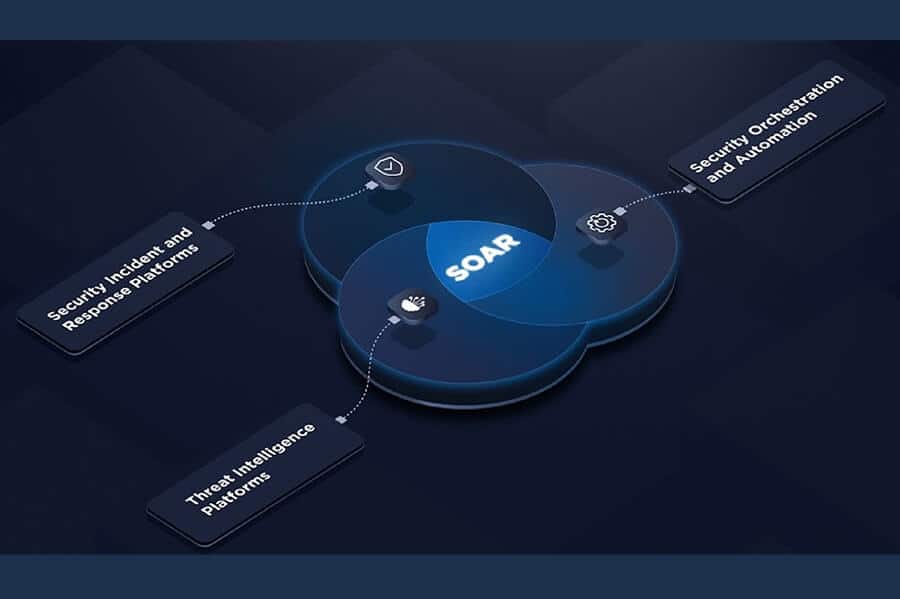
Security automation handles individual tasks without human intervention, while security orchestration connects multiple automated processes into coordinated workflows. SOAR platforms combine both capabilities to streamline cybersecurity operations and improve threat response times.
Security automation refers to technology that performs specific cybersecurity tasks without manual intervention. These tasks include threat detection, alert generation, and basic incident response actions.
Automated systems execute predefined rules and scripts. They scan networks, analyze logs, and respond to known threats using established protocols and procedures.
Security orchestration coordinates multiple automated processes across different security tools. It creates unified workflows that connect various cybersecurity solutions and data sources.
Orchestration platforms integrate disparate security tools into cohesive systems. They enable automated hand-offs between tools and standardize response procedures across the security infrastructure.
SOAR combines Security Orchestration, Automation, and Response into comprehensive platforms. These solutions provide centralized management of security operations through integrated workflows.
SOAR platforms enable organizations to manage threats more efficiently. They reduce manual effort while improving response consistency and speed across security teams.
Early security automation focused on simple rule-based systems for basic tasks. Organizations automate log collection, alert generation, and basic scanning functions in isolated tools.
Traditional automation addressed individual point solutions. Each security tool operated independently with limited integration capabilities.
Modern automation has evolved to include machine learning and artificial intelligence capabilities. These systems analyze patterns, adapt to new threats, and make intelligent decisions based on contextual data.
Contemporary platforms emphasize integration and workflow coordination. They connect previously siloed security tools through APIs and standardized communication protocols.
Current automation handles complex multi-step processes across entire security ecosystems. Organizations now deploy sophisticated playbooks that coordinate responses across multiple tools and teams simultaneously.
| Term | Definition |
| Playbooks | Documented procedures that define automated response workflows for specific security scenarios |
| Orchestration Engine | Core component that coordinates workflows between different security tools and systems |
| Case Management | System for tracking and managing security incidents throughout their lifecycle |
| Integration Connectors | Technical interfaces that enable SOAR platforms to communicate with external security tools |
Threat Intelligence Integration involves incorporating external threat data into automated decision-making processes. This capability enhances the accuracy of automated responses.
Workflow Automation describes the process of connecting multiple security tasks into seamless operational sequences. These workflows eliminate manual handoffs between security tools.
Incident Response Orchestration coordinates automated actions across multiple teams and systems during security events. It ensures consistent response procedures regardless of incident complexity or timing.
Security automation and orchestration systems consist of three interconnected elements that work together to enhance cybersecurity operations. These components integrate security tools, automate repetitive tasks, and coordinate response activities to reduce manual intervention and improve threat detection capabilities.
Security orchestration connects and integrates various security tools and systems into unified workflows. This component serves as the foundation for coordinating multiple security technologies across an organization’s infrastructure.
Orchestration platforms centralize security operations by creating standardized processes that integrate different security tools. These systems enable seamless data sharing between firewalls, intrusion detection systems, threat intelligence platforms, and vulnerability scanners.
The primary function involves workflow management, where orchestration tools define how security processes should execute across multiple systems. Organizations can create custom workflows that automatically trigger specific actions based on predefined conditions or security events.
Security automation executes repetitive security tasks without human intervention through scripts, tools, and platforms. This component focuses on reducing manual workload and accelerating response times for routine security operations.
Automated processes include vulnerability scanning, patch deployment, log collection, and threat hunting activities. These tasks run continuously or on predetermined schedules, ensuring consistent security monitoring and maintenance.
Machine learning capabilities enhance automation by identifying patterns and anomalies in security data. Advanced automation systems can adapt their responses based on historical incident data and evolving threat landscapes.
Security response coordinates the actions taken when security incidents are detected or reported. This component manages the entire incident lifecycle from initial detection through resolution and recovery.
Automated response capabilities include immediate containment actions such as isolating infected systems, blocking network traffic, or disabling compromised user accounts. These rapid responses help minimize potential damage during security incidents.
Response workflows define step-by-step procedures for different types of security events. SOAR technology enables organizations to create standardized response playbooks that ensure consistent incident handling across security teams.
Security automation and orchestration operate through integrated platforms that connect disparate security tools, execute predefined workflows, and manage incident response processes systematically. These systems rely on robust integration capabilities, automated playbooks, and structured case management to coordinate security operations.
Integration capabilities form the backbone of security automation and orchestration platforms. These systems connect with existing security tools through APIs, webhooks, and native connectors to create a unified security ecosystem.
Key integration methods include:
Integration capabilities eliminate data silos by standardizing communication protocols between security tools. This connectivity enables automated data enrichment, where threat indicators get cross-referenced across multiple sources instantly.
The platform maintains persistent connections to integrated tools, monitoring their health and availability. When integrations fail, the system provides fallback mechanisms to ensure continuity of security operations.
SOAR playbooks define step-by-step procedures that execute automatically when specific conditions trigger them. These playbooks codify institutional knowledge and ensure consistent response procedures across security incidents.
Common playbook components include:
Security teams build playbooks using visual workflow designers or code-based templates. The platform executes these workflows in parallel or sequential order, depending on dependencies and resource availability.
Advanced playbooks incorporate machine learning models for threat classification and risk scoring. These intelligent workflows adjust their execution paths based on confidence levels and historical patterns.
Incident management processes coordinate the complete lifecycle of security events from detection through resolution. Case management systems track incident status, assign responsibilities, and maintain detailed audit trails to ensure transparency and accountability.
Case management features include:
Integration capabilities enable case management systems to pull data from multiple sources and update external systems with resolution details. This bidirectional synchronization ensures all stakeholders maintain current incident status.
The system tracks key performance metrics including mean time to detection, response times, and resolution rates. These metrics help security teams optimize their incident management processes and demonstrate operational effectiveness.
Security automation and orchestration deliver measurable improvements in operational efficiency by reducing response times from hours to minutes, eliminating repetitive manual tasks that overwhelm analysts, and creating more robust defense capabilities through consistent, standardized processes.
MTTR represents one of the most critical metrics for measuring security operations effectiveness. Manual incident response processes typically require 30-60 minutes for initial triage and several hours for complete resolution.
Automated playbooks execute predefined response actions within seconds of threat detection. Security teams can achieve MTTR reductions of 60-80% by automating initial containment steps, evidence collection, and stakeholder notifications.
Key MTTR improvements include:
Security analysts face an average of 11,000 alerts monthly, with 52% proving to be false positives. This overwhelming volume creates alert fatigue, causing analysts to miss genuine threats or experience decreased job satisfaction.
Orchestration platforms implement intelligent filtering and correlation engines that reduce alert volumes by 70-90%. Machine learning algorithms identify patterns and automatically eliminate duplicate or low-priority notifications.
Alert reduction strategies include:
Automated security operations create consistent, repeatable processes that eliminate human error and ensure comprehensive threat coverage. Organizations achieve more robust security postures through standardized incident response procedures and continuous monitoring capabilities.
Security teams can implement 24/7 threat detection and response without proportional staffing increases. Automated systems maintain constant vigilance and execute responses even during off-hours or staff shortages.
Security posture enhancements include:
Modern security automation relies on specialized platforms that integrate threat intelligence, orchestrate responses, and leverage machine learning capabilities to enhance security. These technologies work together to create comprehensive defense systems that can detect, analyze, and respond to security incidents at machine speed.
SOAR platforms serve as the central nervous system for automated security operations. These solutions combine security orchestration, automation, and response capabilities into unified systems that coordinate multiple security tools and technologies.
Core SOAR capabilities include:
Leading SOAR platforms provide pre-built integrations with hundreds of security tools. They enable organizations to create custom playbooks that define automated responses to specific threat scenarios.
SOAR tools excel at handling repetitive tasks, such as alert triage, evidence collection, and initial incident analysis. They can automatically gather context from multiple sources and escalate incidents based on predefined criteria.
Security Information and Event Management systems generate the alerts and data that fuel automation workflows. SIEM platforms collect and analyze log data from across the enterprise infrastructure.
XDR solutions extend detection capabilities beyond traditional SIEM by incorporating endpoint, network, and cloud telemetry. This broader visibility enables more comprehensive automated responses.
Key integration benefits:
Microsoft Sentinel exemplifies modern cloud-native SIEM solutions with built-in automation capabilities. It provides native integration with Azure services and supports custom automation rules.
The combination of SIEM/XDR detection with SOAR orchestration creates closed-loop security operations. Threats detected by monitoring systems trigger automated investigation and response workflows.
Machine learning enhances security automation by enabling systems to adapt and improve over time. These technologies power advanced threat detection, behavioral analysis, and predictive security capabilities.
AI-driven automation features:
Artificial intelligence algorithms analyze historical incident data to identify patterns and optimize response procedures. This continuous learning improves the accuracy and effectiveness of automated security solutions.
Machine learning models can process vast amounts of security data to identify subtle indicators of compromise. They excel at detecting unknown threats and zero-day attacks that traditional signature-based systems miss.
Security automation and orchestration platforms address critical operational challenges by enhancing threat detection, streamlining incident response workflows, providing comprehensive vulnerability management, and automating defense against phishing and malware attacks.
Automated threat detection systems continuously monitor network traffic, system logs, and user behavior to identify potential security incidents. These platforms collect and analyze threat intelligence from multiple sources to enhance detection capabilities.
Threat intelligence platforms aggregate data from global threat feeds, security vendors, and internal sources. They automatically enrich security alerts with contextual information about indicators of compromise, attack patterns, and threat actor behaviors.
Organizations can automate the correlation of threat information across different security tools. This process reduces the time required to identify genuine threats versus false positives.
Key detection automation capabilities include:
Security teams benefit from automated threat scoring and prioritization. The system ranks alerts based on severity, potential impact, and confidence levels to focus analyst attention on the most critical issues.
Security incident response workflows can be automated primarily to reduce response times and ensure consistent handling of security threats. Automated systems execute predefined playbooks when specific conditions are met.
Response automation encompasses immediate containment actions, including isolating infected systems, blocking malicious IP addresses, and disabling compromised user accounts. These actions occur within minutes rather than hours.
Security alerts trigger automated investigation processes that gather relevant data from multiple security tools. The system collects logs, network traffic data, and system information to provide analysts with comprehensive incident context.
Common automated response actions:
Organizations typically see 80-90% of security operations tasks can be automated to some extent. This automation significantly reduces the mean time to resolution while enabling security teams to handle more incidents.
Vulnerability management automation streamlines the identification, assessment, and remediation of security weaknesses across IT infrastructure. Automated scanning tools continuously assess systems for known vulnerabilities.
Threat and vulnerability management platforms prioritize vulnerabilities based on the availability of exploits, business impact, and environmental factors. This prioritization helps organizations focus remediation efforts on the most critical issues first.
Automated vulnerability workflows include:
Web application vulnerability scanning automation identifies common security flaws such as SQL injection, cross-site scripting, and authentication bypasses. These scans run continuously or on predetermined schedules.
The automation extends to patch management processes, where systems automatically download, test, and deploy security updates based on predefined policies and maintenance windows.
Automated phishing detection systems analyze email content, sender reputation, and embedded links to identify suspicious messages before they reach users’ inboxes. These solutions use machine learning algorithms trained on known phishing patterns.
Malware detection automation operates at multiple levels, including email gateways, endpoint systems, and network boundaries. Automated systems quarantine suspicious files and block malicious URLs in real-time.
Email security automation features:
Endpoint protection platforms automatically respond to malware infections by isolating affected systems and initiating remediation procedures to prevent further damage. These responses avoid lateral movement of threats across the network.
Organizations implement automated user awareness programs that simulate phishing attacks and provide immediate feedback on training. These programs track user susceptibility and adjust training content accordingly.
Embracing security automation and orchestration enables enterprises to transition from a reactive defense to proactive resilience. By automating repetitive tasks and connecting security tools into cohesive, orchestrated workflows, organizations gain the speed and precision needed to outpace modern threats. This shift not only strengthens defenses but also empowers analysts to focus on higher-value activities, such as strategy, threat hunting, and long-term risk reduction.
The actual value of automation and orchestration lies in their ability to unify people, processes, and technology into a seamless response ecosystem. Instead of struggling with fragmented tools and manual bottlenecks, enterprises can build a security posture that is agile, scalable, and consistently effective. As cyber threats become increasingly complex and rapid, a unified approach becomes essential for protecting critical assets and maintaining trust with customers, partners, and stakeholders.
Ultimately, automation and orchestration are not just efficiency enhancers—they are force multipliers that redefine how enterprises approach cybersecurity. For organizations ready to evolve beyond traditional defense, they represent a decisive step toward building smarter, faster, and more resilient security operations.
Diego is a Security Specialist at Coderio, where he focuses on cybersecurity, data protection, and secure software development. He writes about emerging security challenges, including post-quantum cryptography and enterprise risk mitigation, helping organizations strengthen their security posture and prepare for next-generation threats
Diego is a Security Specialist at Coderio, where he focuses on cybersecurity, data protection, and secure software development. He writes about emerging security challenges, including post-quantum cryptography and enterprise risk mitigation, helping organizations strengthen their security posture and prepare for next-generation threats
Accelerate your software development with our on-demand nearshore engineering teams.