Aug. 30, 2024

7 minutes read
Share this article
Building a successful product involves strategic planning and development. However, one common question in product development is whether to start with a prototype or an MVP (Minimum Viable Product). Knowing the prototype vs. MVP key differences can significantly impact your product’s success.
Though they seem similar, prototypes and MVPs serve different purposes and offer unique advantages. This article will explore Prototype vs. MVP, covering their definitions, key differences, and the benefits each brings to your project.
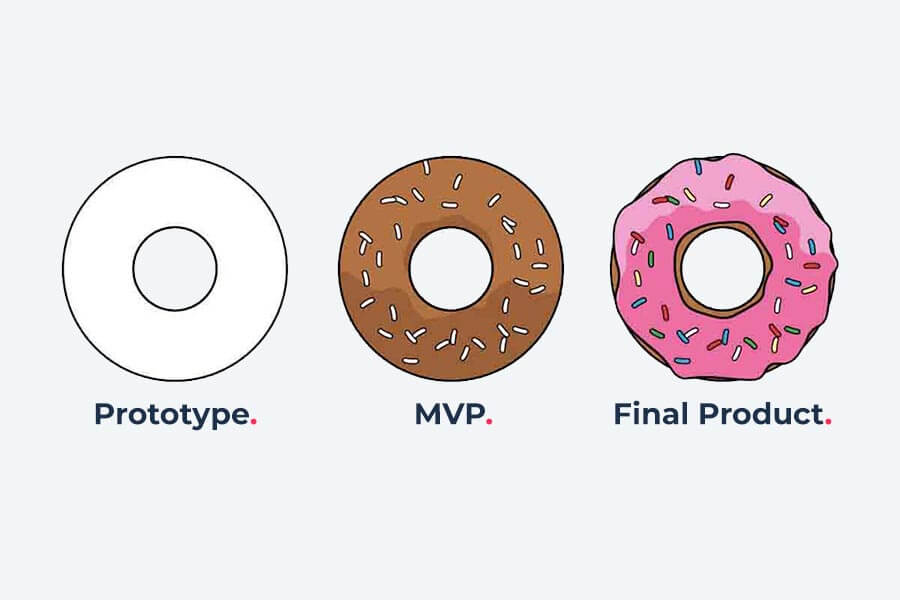
A prototype is an initial version of a product that demonstrates design, functionality, or a concept without being fully developed. It’s commonly used to visualize how a product looks, feels, or operates. Prototypes are typically created in the early stages of development to showcase ideas and gather feedback from stakeholders, designers, or potential users.
On the other hand, an MVP (Minimum Viable Product) is a simplified, functional version of the final product that includes only the essential features needed to address core user problems. An MVP is released to a limited market segment to validate the product’s viability, gather user feedback, and iterate based on real-world insights.
To understand which option best suits your project, let’s examine some critical differences between prototypes and MVPs.
Choosing between a prototype and an MVP depends on the project stage, goals, and resources available. Here are scenarios where a prototype would be a more suitable choice:
An MVP is appropriate when you’re ready to test the core functionality of your product with actual users. Here are a few situations where launching an MVP is beneficial:
Creating a prototype before building an MVP or final product has several advantages:
An MVP is especially beneficial if you want to move from concept to the market quickly:
Using both a prototype and an MVP can be an effective strategy. Here’s how they can complement each other:
This phased approach allows you to iterate and improve your idea while keeping costs manageable and reducing development risks.
When choosing between a prototype and an MVP, consider your goals, timeline, and resources. Here’s a quick guide to help you decide:
Choose a Prototype if:
Choose an MVP if:
Understanding the difference between a Prototype and an MVP is crucial in making informed decisions about your software development project. A prototype helps visualize and test ideas internally, while an MVP lets you validate the product with real users. Both serve unique roles in product development and, when used effectively, can help streamline the development process, reduce costs, and maximize your chances of success.
Aligning your strategy with your goals and project stage will create a more efficient and effective development process. Whether you start with a prototype, build an MVP, or use both, these tools are invaluable in bringing your product idea to life and ensuring it meets user needs.
If you want to learn more, there is another stage that comes before all this: Proof of Concept.
Mike is an experienced full-stack marketing professional who brings deep experience in leadership roles for high-growth organizations in the technology space. For more than 15 years, he’s led successful marketing teams in Latin America and the USA. Specialized in Digital Marketing, with a strong emphasis on scaling B2B technology companies via growth marketing, he’s developed marketing initiatives for companies like Hewlett-Packard, Unilever, Coca-Cola, Mondelez, Chrysler, Beiersdorf, and Colgate.
Mike is an experienced full-stack marketing professional who brings deep experience in leadership roles for high-growth organizations in the technology space. For more than 15 years, he’s led successful marketing teams in Latin America and the USA. Specialized in Digital Marketing, with a strong emphasis on scaling B2B technology companies via growth marketing, he’s developed marketing initiatives for companies like Hewlett-Packard, Unilever, Coca-Cola, Mondelez, Chrysler, Beiersdorf, and Colgate.
Accelerate your software development with our on-demand nearshore engineering teams.