Mar. 25, 2026

13 minutes read
Share this article
Waterfall Methodology remains a valid delivery model in 2026, particularly for projects that depend on stable requirements, strict approvals, and formal documentation. In environments where scope is expected to hold, a sequential process can reduce ambiguity, improve auditability, and make funding decisions easier. Teams that rely on custom software development services often still encounter Waterfall in regulated programs, infrastructure modernization, and fixed-scope enterprise work.
That continued relevance does not mean Waterfall is the default choice. Project Management Institute research published in 2024 found that 48% of projects were rated successful, 40% produced mixed results, and 12% were outright failures. The same research found that only 37% of projects consistently define success criteria, implement measurement systems, and track performance throughout delivery. In other words, project outcomes depend less on whether a team labels itself Waterfall or Agile and more on whether it manages scope, governance, and feedback with discipline.
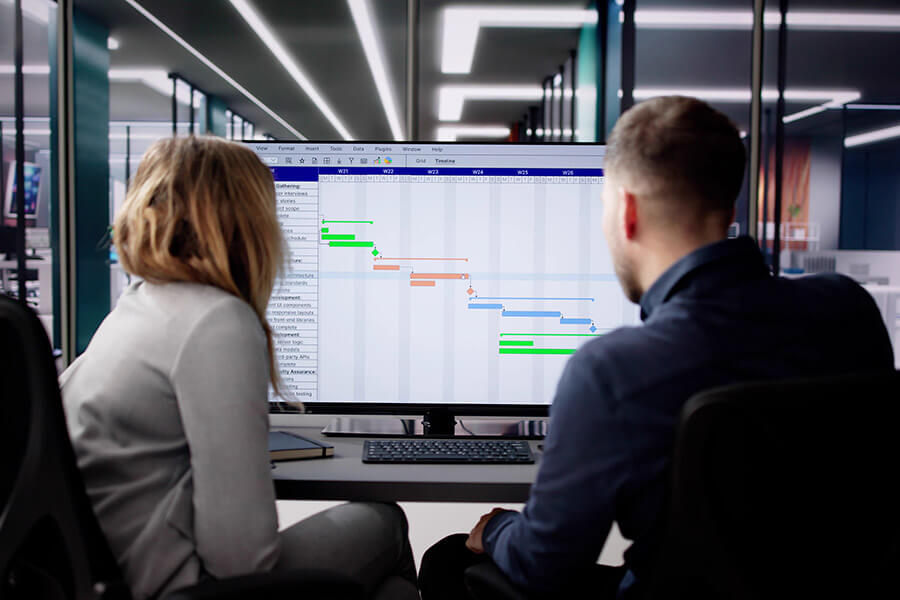
Waterfall is a sequential project delivery method in which one phase is completed and approved before the next begins. In software work, that usually means requirements are finalized before design, design is approved before coding, coding is completed before testing, and testing is substantially complete before release.
Its logic is simple: uncertainty should be reduced early, handoffs should be formal, and progress should be visible through documents, approvals, and milestones rather than through frequent scope changes.
This makes Waterfall especially attractive when:
Waterfall traces its formal origins to a 1970 paper by Dr. Winston W. Royce titled “Managing the Development of Large Software Systems.” Royce, working at TRW on large defense and aerospace software contracts, described a sequential development process in which each phase — requirements, design, coding, testing, and operations — flowed into the next only after formal completion and review. The paper gave software project management its first widely cited process model, and the sequential diagram it contained became the template that organizations and government contractors adopted through the 1970s and 1980s.
There is a significant irony in that history. Royce himself described the pure sequential model as fundamentally flawed. He argued in the same paper that a single-pass linear process was risky for large software projects because it offered no mechanism to correct upstream errors discovered during testing. His actual recommendation was for iterative development with at least one preliminary design cycle before the main sequence began. That recommendation was largely ignored. What spread was the diagram, not the warning — which is why Waterfall entered mainstream practice as a rigid phase-gate model rather than the cautious, feedback-aware process its originator had in mind.
The name itself came later. Royce never used the word “Waterfall” in the 1970 paper. The term entered common use through subsequent literature and became the standard label for sequential, document-driven delivery by the time software project management formalized in the early 1980s. Its manufacturing and construction roots are visible in the logic: industries where rework is physically expensive had long relied on sequential stage-gating to reduce the cost of late changes, and software managers borrowed that structure on the assumption that code, like concrete, was cheaper to get right before you poured it.
Although organizations name phases differently, most Waterfall software projects follow the same structure.
Waterfall persists because it solves a real management problem: some projects need predictability more than flexibility.
PMI’s 2024 findings showed that predictive, hybrid, and agile approaches can all perform well when matched to project needs. That point matters. Waterfall is not obsolete; it is specialized.
Waterfall becomes fragile when assumptions are wrong early and expensive to revisit later.
Users often do not interact with the working product until late in the cycle. If requirements were incomplete or misunderstood, the discovery cost appears after substantial budget has already been committed.
Digital products that depend on user behavior, experimentation, or shifting market priorities rarely benefit from locking scope too early. That is why many product teams favor Scrum methodology, Kanban practices, or broader Agile methodologies when customer feedback must shape the roadmap.
Although Waterfall includes a formal testing phase, real-world schedules often compress it when upstream work slips. When that happens, the model loses one of its main benefits: orderly validation against a defined baseline.
Change is possible in Waterfall, but it is expensive. Formal change requests protect the project from uncontrolled drift, yet they also slow adaptation when a requirement genuinely needs revision.
The real distinction is not structure versus chaos. It is whether a project is optimized for planned certainty or managed learning.
| Decision factor | Waterfall | Agile or flow-based methods |
| Requirements stability | Best when requirements are mostly known upfront | Best when requirements are expected to change |
| Governance model | Formal approvals and stage gates | Frequent review and reprioritization |
| Delivery cadence | Larger releases after major phases | Smaller, recurring increments |
| Documentation style | Extensive and approval-driven | Lighter, continuously updated |
| Customer feedback timing | Concentrated later in the cycle | Integrated throughout delivery |
| Best-fit examples | Regulated systems, fixed-scope contracts, migration programs | Product discovery, SaaS features, iterative platform work |
A growing number of organizations use hybrid models because many initiatives contain both predictable and uncertain work. A platform migration may follow a Waterfall structure for architecture, security, and release control, while feature validation happens iteratively. In delivery terms, that often blends nicely with DevOps practices even when the overall governance model remains predictive.
Waterfall is usually the right choice when most of the following are true:
Typical examples include:
The model is also a strong option when the organization already knows exactly what it is buying and primarily needs disciplined execution.
A Waterfall project fails less often when it borrows selected modern practices without abandoning its structure.
The broader software market still rewards disciplined engineering. The U.S. Bureau of Labor Statistics projects 15% employment growth for software developers, QA analysts, and testers from 2024 to 2034, with an average of about 129,200 openings per year. That demand reflects the continued need for teams that can build, test, secure, and maintain critical systems, not only ship consumer features at speed.
For that reason, Waterfall should not be framed as old thinking. It is better understood as a governance pattern. It performs best when delivery risk is dominated by compliance, integration, release control, and requirement traceability. It performs poorly when delivery risk is dominated by uncertainty about what users actually need.
Organizations usually struggle with Waterfall for one of five reasons:
The best correction is rarely a complete methodological switch. It is often a better fit between the work and the delivery model.
The main goal of Waterfall methodology is to deliver a software project through a controlled, sequential series of approved phases — with clear documentation, formal sign-offs, and measurable handoffs between stages. By reducing ambiguity early and locking in scope before development begins, the model provides project sponsors, procurement teams, and compliance reviewers with a predictable baseline for costs, schedules, and deliverables. This makes it especially valuable in environments where variance control matters more than adaptability. It is not designed for discovery; it is designed for disciplined execution of well-understood work.
Yes, and its use is more widespread than the industry conversation about Agile sometimes implies. Waterfall remains the delivery model of choice in regulated industries such as banking, insurance, healthcare, and defense, where formal approvals, traceability, and audit trails are non-negotiable. It is also common in fixed-scope enterprise contracts, government programs, ERP integrations, and infrastructure modernization projects where multi-vendor dependencies make continuous reprioritization impractical. PMI’s 2024 research confirmed that predictive approaches — when matched to the right project type — perform comparably to Agile methods on key delivery outcomes.
Its biggest weakness is that feedback arrives late. If requirements were incomplete, misunderstood, or based on faulty assumptions, the cost of correction compounds with each phase already completed and approved. A design flaw discovered during testing, for example, may require rework that traces back through implementation and into architecture decisions made months earlier. This is the dynamic Royce himself warned about in 1970, and it remains Waterfall’s defining vulnerability: the model is only as strong as the quality of the thinking done before development begins.
The core difference is not structure versus flexibility — it is when learning happens. Waterfall front-loads planning and assumes requirements can be known upfront; Agile distributes learning throughout delivery and expects requirements to evolve. Waterfall progresses phase by phase with formal approvals between stages; Agile delivers in short cycles with stakeholder feedback integrated at regular intervals. Neither is universally superior. Waterfall performs better when the problem is well-defined and the cost of late change is high; Agile performs better when discovery is part of the work and early assumptions are likely to be wrong.
A team should prefer Waterfall methodology when requirements can be specified in detail before development starts, compliance and governance require formal stage-gate approvals, downstream failure carries legal or financial consequences, and external dependencies make iterative reprioritization unrealistic. Typical examples include government and defense systems, medical back-office platforms, data migration programs, and infrastructure replacements with strict cutover windows. The clearest signal is this: if the organization already knows exactly what it is building and primarily needs disciplined execution, Waterfall is likely the right governance model.
Yes, and hybrid models are increasingly common precisely because many large initiatives contain both predictable and uncertain work. A platform migration, for example, might follow Waterfall governance for architecture decisions, security review, and release control, while feature validation and user interface design happen iteratively. PMI’s 2024 findings noted that predictive, hybrid, and Agile approaches can all perform well when matched to the nature of the work. The practical question is not which model to defend, but where the boundary between planned certainty and managed learning should sit within a given program.
That balance was visible even in Royce’s original framing: sequential control works, but only when the assumptions it locks in place are sound. Waterfall methodology remains useful when software projects demand control, traceability, and predictable execution. It is most effective when requirements are stable, approvals are formal, and the cost of late change is high. Its strengths are clarity, documentation, and governance. Its weaknesses are delayed feedback, costly rework, and limited flexibility when assumptions change.
The most effective organizations do not defend Waterfall or Agile as an ideology. They choose the delivery structure that best fits the work’s risk profile. When a project is defined by certainty, Waterfall is often the right tool. When it is defined by discovery, it usually is not.
Coderio is a nearshore software development company with 9+ years of experience building distributed engineering teams across Latin America for Fortune 500 companies.
Our editorial team brings together software engineers, solution architects, and technology strategists with hands-on exposure across backend and frontend architecture, cloud infrastructure, mobile development, and data engineering.
We write from direct technical and operational experience, covering the strategic and delivery decisions that shape how modern software teams are designed and run. When we publish on engineering team structure, distributed execution, or regional hiring strategy, it reflects what we see working across the technology organizations we partner with.
Coderio is a nearshore software development company with 9+ years of experience building distributed engineering teams across Latin America for Fortune 500 companies.
Our editorial team brings together software engineers, solution architects, and technology strategists with hands-on exposure across backend and frontend architecture, cloud infrastructure, mobile development, and data engineering.
We write from direct technical and operational experience, covering the strategic and delivery decisions that shape how modern software teams are designed and run. When we publish on engineering team structure, distributed execution, or regional hiring strategy, it reflects what we see working across the technology organizations we partner with.
Accelerate your software development with our on-demand nearshore engineering teams.