
Hire Senior React Developers
US Timezone Aligned,
100% English Proficient,
Senior React Developers.
React powers some of the most demanding frontends in the world, and building on it well requires more than framework familiarity. Coderio gives you immediate access to senior React engineers, rigorously vetted, nearshore, and ready to add value from day one.
React Staff Augmentation
★ ★ ★ ★ ★ 4.9 Client Rated
TRUSTED BY THE WORLD’S MOST ICONIC COMPANIES.


React Staff Augmentation
★ ★ ★ ★ ★ 4.9 Client Rated
React Staff Augmentation Made Easy.
React Staff Augmentation Made Easy.
Smooth. Swift. Simple.

Discovery Call
We are eager to learn about your business objectives, understand your tech requirements, and specific React Development needs.

Team Assembly
We can assemble your team of experienced, timezone aligned, expert React developers within 7 days.

Onboarding
Our expert React developers can quickly onboard, integrate with your team, and add value from the first moment.
About React Staff Augmentation.
Why Hire React Developers Through Coderio.
React Velocity Without the Hiring Risk
React is the most widely adopted frontend framework in the world — which creates the illusion that finding a great React developer should be easy. It is not. The framework's flexibility means it accommodates both disciplined, well-architected applications and chaotic, unmaintainable codebases with equal ease, making the gap between engineers who write working React and engineers who write production-grade React significantly wider than the market size implies. Our pre-vetted React engineers are ready to join your team within 7 days, timezone-aligned, already productive in your stack, and contributing to real frontend architecture decisions from the first sprint — without the months of recruiting that finding genuine depth through traditional hiring channels requires.
Senior Depth Across the Full React Ecosystem
Every React developer in our network has a minimum of 7 years of hands-on production experience — and for a framework as unopinionated as React, that seniority carries more weight than in more structured environments. Engineers who have built and maintained large-scale React applications know how to design component hierarchies that remain comprehensible as the feature set grows, choose state management strategies that reflect actual application complexity rather than resume padding, and make rendering performance decisions that matter under real user traffic. They understand the difference between what works in a demo and what holds up in production with ten thousand concurrent users.
Nearshore Collaboration That Feeds Your Feedback Loops
Our React developers operate from six Latin American development centers — Buenos Aires, Medellín, Lima, Santiago, Mexico City, and Montevideo — providing full real-time collaboration with your US-based team throughout the working day. React frontend development is inherently iterative — it depends on continuous, rapid feedback loops between engineers, product managers reviewing component behavior in staging, and UX designers whose specifications must be interpreted and sometimes negotiated during implementation. These feedback loops require engineers who share your working hours, not engineers who respond to overnight review comments in the morning after your team has already moved on to the next task.
You Stay in Control of Your Frontend Architecture
React staff augmentation keeps your developers fully integrated into your team — following your component naming conventions, operating within your chosen state management approach, attending your sprint ceremonies, and building to the frontend architecture standards your technical lead has established. There are no delivery handoffs to an external team with its own internal priorities, no project management layers inserted between you and the engineers making frontend decisions, and no vendor-side choices that override your design system or your roadmap. You determine the component structure, the testing requirements, the accessibility standards, and the performance budget. Our engineers execute to those decisions with full transparency at every stage.
Enterprise-Tested Frontend Engineering Standards
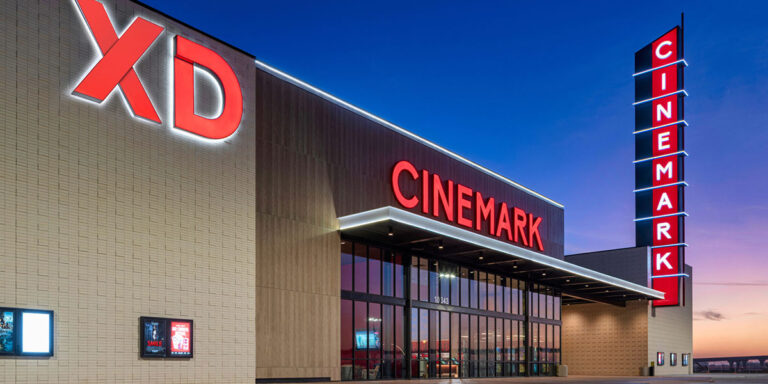
Our engineering practices were shaped by React development engagements with organizations including Coca-Cola, FedEx, Cinemark, Avon, Santander, and Cencosud — companies where React application performance, accessibility compliance, design system fidelity, and long-term component maintainability are enforced at the highest level. The Coca-Cola AI-driven demand prediction frontend, Cinemark's ticket-purchasing experience redesign, Cencosud's e-commerce digital transformation, and the Avon self-service customer platform were all delivered with Coderio React engineering involvement. The same standards — comprehensive React Testing Library and Cypress coverage, Lighthouse performance auditing, WCAG 2.1 AA accessibility compliance, and full Storybook documentation — apply to every React developer we place.
Access to the Full Depth of the React Ecosystem
React frontend development in 2026 spans a significantly broader ecosystem than the core library — Next.js App Router and React Server Components for server-side rendering and streaming, Zustand and Redux Toolkit for state management at different complexity scales, TanStack Query for server state synchronization, Tailwind CSS and component libraries including Shadcn/ui and Radix for design system implementation, Vite and Turbopack for build tooling, Storybook for component documentation, and Playwright and Cypress for end-to-end testing. Staff augmentation gives you targeted access to engineers with the specific React ecosystem depth your current program phase requires — not a developer who lists everything on a profile but has shallow experience with most of it.
Vetting That Evaluates Frontend Architecture Judgment, Not Just Component Authoring
Finding a React developer who can own a frontend platform — design scalable component architecture, make sound performance trade-off decisions, and build accessible, testable UIs that your team can extend without accumulating debt — requires an evaluation process that goes significantly beyond asking candidates to implement a counter or explain the virtual DOM. Our selection process combines technical screening, real React codebase review, and deep technical interviews conducted by senior frontend engineers, assessing depth across component design, hook composition patterns, state management strategy selection, rendering optimization, accessibility implementation, and the engineering judgment that determines whether a React application remains maintainable at team scale over a multi-year product lifecycle.
English Fluency and Collaboration Quality Evaluated With the Same Rigor as Technical Depth
Nearshore delivery works because our engineers communicate as genuine team members — not remote contractors who surface only during assigned code review windows and disappear between sprint ceremonies. Every React developer we place has been evaluated for professional English fluency, proactive communication habits, and the ability to participate fully in the collaborative working relationships that React frontend development demands. React engineers work at the intersection of engineering, design, and product — they translate design specifications into component implementations, negotiate API contracts with backend teams, and explain UI behavior trade-offs to product stakeholders who need to understand the implications for the user experience. All of those conversations require clear, proactive communication. We assess it to the same standard as TypeScript proficiency.
Backed by the Full Power of Coderio's Engineering Community
When you hire a React developer through Coderio, you are not getting an isolated frontend engineer working independently on component implementation. Our Guilds and Chapters model ensures that the collective knowledge of Coderio's entire engineering community — spanning backend API design, cloud infrastructure, DevOps, security, data engineering, and AI integration — is available to the React developer working on your frontend. When a challenge arises that extends beyond React itself — a Next.js deployment architecture decision with infrastructure implications, a backend API contract that needs to be redesigned to support a frontend feature, or a design system decision with accessibility compliance requirements — the broader community is available to support without requiring a separate engagement. Our COO, CTO, Subject Matter Expert, and Service Delivery Manager also participate actively in oversight and quality assurance throughout the engagement.
React in the Broader Tech Ecosystem.
React rarely works alone. Our developers bring deep experience integrating React with the technologies your stack already depends on. From RESTful and GraphQL APIs to Node.js and Python backends, from AWS and cloud infrastructure to CI/CD pipelines and design systems. Whether your team runs a full JavaScript stack or a mixed-language environment, our React engineers know how to fit in and move fast.
The React Tech Stack Our Developers Master
Our React engineers bring hands-on expertise across the full ecosystem surrounding the framework and not just the core library.
- Core: React 18/19, JavaScript (ES6+), TypeScript
- State Management: Redux, Redux Toolkit, Zustand, Context API, React Query
- Routing: React Router, Next.js (App Router)
- Styling: Tailwind CSS, Styled Components, Material UI, Chakra UI
- Testing: Jest, React Testing Library, Cypress
- API Integration: REST, GraphQL, Axios, Apollo Client
- Build Tools: Vite, Webpack, Turbopack
- Deployment: Vercel, Netlify, AWS Amplify
- Version Control: Git, GitHub, GitLab

When Companies Hire React Developers Through Coderio.
Scaling a React Frontend Team to Match Product Demand
Your React application is growing and your in-house frontend team cannot keep pace with the feature demand your product roadmap requires. Every sprint, component work gets deprioritized in favor of backend concerns, scope gets cut to meet deadlines, and the frontend accumulates the shortcuts that make the next sprint slower than the last. We add experienced React engineers to your team within days — pre-vetted, timezone-aligned, and integrated into your existing component architecture and design system — without the months of recruiting that traditional hiring requires when your product release calendar cannot wait for the process to complete.
Building a New React Application or Design System From Scratch
Launching a new React product or establishing a shared design system across multiple product surfaces requires engineers who make the architectural decisions that shape the frontend for years before a single component ships to users. Component hierarchy design, state management approach selection, design token structure, routing architecture, server-side rendering strategy, testing framework setup, and the Storybook documentation system that keeps the component library coherent as it grows — all of these decisions are made early in a React project and constrain everything that follows. Our developers bring the greenfield architecture experience to get those decisions right rather than discovering their consequences at the twelve-month mark.
Migrating From a Legacy Frontend to React
Migrating from Angular, AngularJS, jQuery, or a custom frontend framework to React requires engineers who understand both the technical migration path and the organizational complexity of keeping a production frontend operational throughout a migration that may span multiple quarters. The migration strategy must be phased — strangler fig approaches that route traffic progressively to React components while the legacy system remains operational — and the engineers executing it must understand both the source system well enough to migrate its behavior faithfully and the React ecosystem well enough to implement the target architecture correctly. Our developers have navigated exactly these migrations on live production applications under real business continuity constraints.
Building Next.js Applications With Server-Side Rendering
Next.js has become the default production React framework for applications requiring server-side rendering, static site generation, or the streaming server components introduced in the App Router — and the engineering requirements for production Next.js at scale go significantly beyond what most React developers who learned the framework on the client side are prepared for. App Router layout design that balances server and client component boundaries correctly, streaming with Suspense that improves time-to-first-byte without introducing waterfall patterns, Next.js caching strategies that are explicit rather than implicit, and the edge runtime deployment considerations that affect how middleware and API routes behave — these are the capabilities our Next.js-experienced React engineers bring from the first day on your team.
Filling a Critical React Engineering Gap
A key React engineer is leaving, going on extended leave, or has become unavailable at a moment when your frontend development schedule cannot absorb the disruption. React codebases frequently carry concentrated institutional knowledge — the specific custom hook implementations that underpin multiple components, the design system conventions that only one engineer fully enforces in code review, the Zustand store structure that took multiple refactoring cycles to get right, or the performance optimization work that eliminated a critical rendering bottleneck in a flow that is now business-critical. We provide immediate, qualified coverage that maintains your frontend development cadence and prevents the regression of the engineering quality standards your team has established.
Building React Dashboards, Data Visualization, and Admin Interfaces
Enterprise-grade React dashboards — internal operations tools, business intelligence interfaces, real-time monitoring platforms, multi-tenant admin panels — require a different engineering profile from consumer product frontend development. Data visualization using Recharts, Nivo, or D3.js integrated into React component hierarchies, complex filterable table implementations using TanStack Table, real-time data updates via WebSocket or server-sent event integration, role-based UI rendering that enforces access control at the component level, and form architecture using React Hook Form and Zod for complex data entry workflows — these are the capabilities that distinguish React engineers who have built enterprise interfaces from those who have built marketing sites and consumer applications.
Reinforcing for a High-Stakes React Launch or Migration
Major React application releases, Next.js App Router migrations, design system launches that deprecate a legacy component library, and React 18 or 19 upgrade programs all share one defining characteristic: the consequences of a frontend engineering failure during these moments — rendering regressions, performance degradations, accessibility violations, or hydration errors that surface under production traffic — are significantly higher than during routine sprint delivery. We provide senior-level React engineering reinforcement for exactly these high-stakes moments: engineers who can own critical frontend workstreams independently, conduct thorough pre-launch testing across browsers and devices, and give your team the capacity margin needed to execute a high-stakes frontend delivery with the rigor it demands.
Integrating React Frontends With AI-Powered Features
As AI capabilities become standard product requirements in 2026, React engineers are increasingly responsible for implementing the frontend layer that makes AI features usable — streaming LLM response rendering using the Vercel AI SDK, conversational UI components that manage multi-turn interaction state correctly, real-time audio and video AI feature integration, and the evaluation and feedback collection interfaces that allow product teams to measure AI output quality from actual users. Building these features correctly requires React engineers who understand both the frontend engineering requirements and the AI system architecture constraints — knowing, for example, how to render a streaming response progressively without introducing layout shift or blocking the main thread.
Building Accessible React Applications That Meet Legal and Regulatory Standards
Web accessibility has moved from best practice to legal obligation across multiple jurisdictions — ADA litigation targeting inaccessible web interfaces continues to grow in the US, and the EU's European Accessibility Act requirements affect any organization serving European users. Building React applications that genuinely meet WCAG 2.1 AA standards requires engineers who understand accessibility as a frontend engineering discipline — correct ARIA role and attribute usage, keyboard navigation implementation across custom interactive components, focus management in dynamic interfaces including modals and drawers, screen reader testing across NVDA, VoiceOver, and JAWS, and color contrast enforcement at the design token level rather than as a post-hoc visual audit. Our engineers treat accessibility as a delivery requirement built into every component, not a compliance checkbox reviewed at the end of development.
React FAQs.
- What is React, and why is it the leading frontend framework?
React is a JavaScript library developed by Meta for building user interfaces through reusable components. Its virtual DOM, unidirectional data flow, and vast ecosystem have made it the most widely adopted frontend technology for building scalable, high-performance web applications. - When should I use React vs. Angular or Vue?
React is the strongest choice when you need maximum flexibility, a large talent pool, and a component-driven architecture that scales. Angular suits teams that prefer a full opinionated framework with built-in structure. Vue is a lightweight alternative often preferred for simpler applications or smaller teams. - What is the difference between React and React Native?
React is used for building web applications. React Native is a separate framework that uses the same component model to build native mobile applications for iOS and Android. Many of our developers have experience in both. - What is Next.js, and do your developers work with it?
Next.js is a React-based framework that adds server-side rendering, static site generation, and file-based routing on top of React. It is increasingly the default choice for production React applications. Yes, our developers are experienced with Next.js, including the App Router introduced in recent versions. - Can your React developers work with our existing backend?
Yes. Our engineers have extensive experience integrating React frontends with a wide range of backends, including Node.js, Python/Django, Java/Spring Boot, Ruby on Rails, and .NET, using both REST and GraphQL APIs. - How do your developers handle performance optimization in React?
Our engineers apply techniques such as code splitting, lazy loading, memoization with useMemo and useCallback, virtualized lists, and bundle analysis to ensure that React applications are fast and efficient at scale.

Success Cases.
Success Cases.
Helping businesses of all sizes across the Americas flourish.
Helping businesses of all sizes across the Americas flourish.































Only the Best React Developers.
We vet for engineers who can architect a component system, not just build one screen at a time.
Finding a React developer who can truly own a frontend platform — not just assemble components — requires evaluating depth that a GitHub profile full of tutorials doesn’t reveal. Our selection process combines technical screening, real React codebase review, and deep technical interviews conducted by senior frontend engineers, assessing React-specific expertise across component architecture, hook composition patterns, state management strategy, rendering performance, and accessibility implementation. We don’t just verify that a developer knows useState and useEffect; we verify that they can design component hierarchies that stay maintainable as a team scales, reason through re-render and memoization tradeoffs, and make sound architectural decisions under real production constraints — not just in a coding challenge sandbox.
What sets our process apart is the bar we hold on the non-technical side. Working nearshore demands engineers who communicate proactively, adapt to your workflows, and operate as true team members rather than remote contractors. A React engineer sits at the intersection of design, product, and backend — translating a Figma file into a working interface, negotiating an API contract, explaining a UX tradeoff to a stakeholder who isn’t technical. Every React developer we place has been evaluated for English fluency, responsiveness, and professional maturity, because technical depth without that collaboration is only half the equation.
Our React Superpower.
We build high-performance software engineering teams better than everyone else.
Retention Built Around Component Architecture, Not Just Code
A 3-year average client relationship and 72 NPS score translate directly for React teams: the engineer who designed your component architecture six months ago is still the one maintaining it, not a new hire reverse-engineering someone else's state management decisions.
Senior React Talent in 7 Days, Not Six Weeks
Our 10,000+ pre-vetted engineers include developers who've architected production React applications at scale — not candidates whose React experience is limited to isolated component demos or bootcamp projects.
Your Engineer Has an Entire Engineering Community Behind Them
Through Guilds and Chapters, a React engineer facing a backend API design question, a performance bottleneck, or a Next.js server-side rendering decision can pull in the right Coderio specialist immediately — without a separate procurement process.
Standards Shaped by Enterprise-Scale Frontend Work
Component architecture discipline, accessibility compliance, and performance optimization practices we apply across every React engagement come from Fortune 500 engagements where frontend performance directly affects revenue.
Battle-Tested Across Industries and UI Complexity
Our React engineers have built dashboards, e-commerce storefronts, and customer portals across fintech, retail, and consumer platforms — the range that comes with genuinely varied frontend complexity, not just repetition of the same UI patterns.
Real Executive Involvement, Every Engagement
Our CIO, CTO, Subject Matter Expert, and Service Delivery Manager stay engaged throughout — not just present for the sales conversation.
Hiring React Developers Through Coderio FAQs.
How quickly can I get a React developer?
In most cases, we can match you with a qualified React developer and have them onboarded within 7 days of your discovery call.
Do I interview the candidates before they join my team?
Yes. You will have the opportunity to meet and evaluate shortlisted candidates before making a final decision. If you choose to skip the interview stage and move directly to onboarding, we can have a pre-vetted React developer on your team even faster.
Can I hire more than one React developer at a time?
Absolutely. We can assemble a full React frontend team or provide individual engineers depending on your needs, scaling up or down as your project demands change.
What happens if the developer isn't a good fit?
We stand behind our placements. If a developer isn’t meeting expectations, we will work with you to find a replacement promptly.
Is there a minimum engagement period?
We accommodate both short-term and long-term engagements. Contact us to discuss the arrangement that best fits your situation.
Can I scale my React team up or down as the project evolves?
Yes. One of the core advantages of staff augmentation is flexibility. You can add React developers as demand grows and reduce the team size when the project phase is complete — without the overhead or risk of permanent hiring decisions.
Will my React developer work exclusively with my team?
Yes. When you hire a React developer through Coderio, that engineer is dedicated exclusively to your team and your project. They integrate into your workflows, attend your standups, and operate as a full member of your organization.
Do your React developers sign NDAs and IP agreements?
Yes. All Coderio developers are covered by confidentiality and intellectual property agreements before beginning any engagement, ensuring your codebase, data, and proprietary information are fully protected from day one.
Book a Discovery Call.
The talent you need is just a call away, ready to become a seamless extension of your team.