


Top-Rated UX/UI Design Company

Accelerate Your UX/UI Design.

We swiftly provide you with enterprise-level engineering talent to outsource your UX/UI Design. Whether a single developer or a multi-team solution, our experienced developers are ready to join as an extension of your team.

UX/UI Design

★ ★ ★ ★ ★   4.9 Client Rated

TRUSTED BY THE WORLD’S MOST ICONIC COMPANIES.

UX/UI Design

★ ★ ★ ★ ★   4.9 Client Rated

Our UX/UI Design Services.

Custom UX Design

You need experiences that feel effortless to your users and true to your brand. Coderio's designers apply cognitive psychology and tools like Miro and Figma to map user flows and build interfaces tailored to how your customers actually think and behave. Every decision is grounded in what drives loyalty and retention, not guesswork. Whether you're building for web, mobile, or hybrid platforms, you get custom UX design that elevates your brand and keeps users coming back. You gain a partner who treats your product's usability as a direct extension of your business goals, refining every flow until it feels effortless.

Interactive UI Design

Your interface is the first thing users judge and the reason they stay or leave. Coderio designs interactive UI that prioritizes function and intuitive navigation, giving your audience a fluid experience across every device they use. You get interfaces built for engagement, not just appearance, so usability improves alongside satisfaction. Each interaction is designed to feel natural, reducing friction and confusion at every touchpoint. The result is a product that keeps users engaged longer and drives the kind of long-term loyalty that turns casual visitors into repeat customers who trust your brand and return without hesitation.

Mobile-First and Responsive Design

Your customers expect your platform to work flawlessly on the device in their hand. Coderio builds with a mobile-first approach, so your product looks and performs beautifully no matter the screen size. You get responsive design that delivers a consistent, delightful experience across desktop, tablet, and mobile without compromise. This means fewer support headaches, higher satisfaction, and a platform ready for however your users choose to engage. As mobile usage keeps climbing, you stay ahead with a design strategy built for where your audience already is, protecting engagement across every device they own.

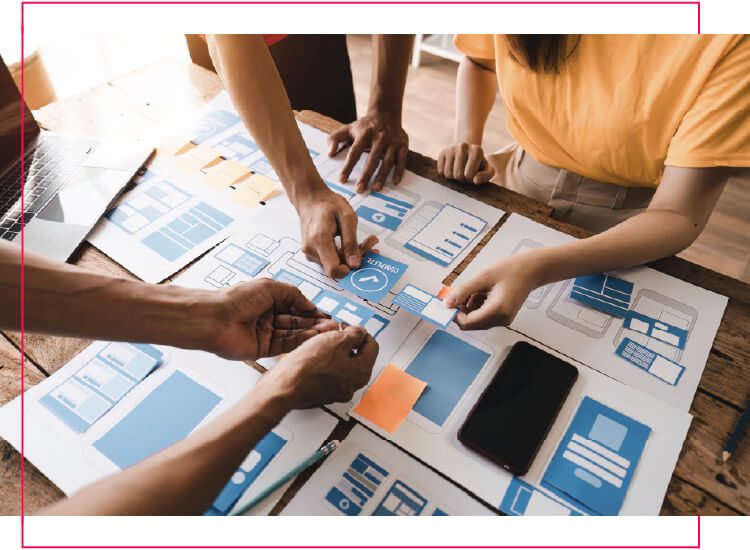
Wireframing and Prototyping

You shouldn't have to guess how your product will feel before it's built. Coderio creates wireframes and interactive prototypes using tools like Axure and InVision, giving you a clear blueprint of the user experience early in the process. You and your stakeholders can interact with the design before a single line of code is written, catching issues while they're still cheap to fix. This upfront clarity streamlines feedback, reduces costly revisions later, and keeps your development timeline on track from day one to launch, so your team builds with confidence instead of assumptions.

Strategic UX Planning

Every successful digital product starts with a plan grounded in your business goals. Coderio aligns user experience strategy with what you're actually trying to achieve, optimizing workflows, interactions, and navigation from the ground up. You get a roadmap that connects wireframes to final implementation, so nothing gets designed in isolation. This strategic foundation enhances usability, boosts engagement, and turns your product into a measurable driver of business outcomes. You're not just getting a design, you're getting a plan built to perform, with every decision tied back to the results you actually need to hit.

User-Centric Research and Analysis

Great design starts with understanding your users, not assuming you already do. Coderio conducts usability testing, heatmap analysis, and user interviews to gather insights you can act on immediately. You get a data-driven foundation that ensures your product meets real user needs instead of internal guesses. This research directly increases engagement, conversion rates, and customer satisfaction because decisions are based on evidence, not opinion. You move forward with confidence, knowing every design choice is backed by how your actual users think, behave, and respond to the product you're building for them.

Design Optimization

Your existing platform has untapped potential sitting in its friction points. Coderio analyzes user interactions, monitors feedback, and refines your design to remove the obstacles slowing your users down. You get continuous optimization that improves satisfaction, efficiency, and retention without a full rebuild. This ongoing process means your platform keeps getting better as user behavior and expectations evolve over time. Instead of a one-time fix, you gain a design partner focused on maximizing the performance of what you've already built, so every improvement compounds and keeps your product ahead of shifting user demands.

Modernization and Redesign

An outdated platform holds your business back even when the product underneath is solid. Coderio revitalizes your application or website by enhancing aesthetics, usability, and performance while preserving the brand identity your customers already recognize. You get a modernized product that feels current without losing what makes it uniquely yours. This keeps you competitive in a market where user expectations shift fast, and it extends the life of your existing investment instead of forcing a costly rebuild from scratch. You move forward with a platform that finally matches the ambition of your business.

Information Architecture Design

If users can't find what they need, nothing else about your design matters. Coderio structures your content so navigation feels intuitive and information is easy to locate, giving your platform a foundation built for clarity. You get an architecture that supports both usability and your broader business goals, reducing frustration and abandonment. This structural work happens before the visual layer, but it's what makes everything else function well. A well-organized platform means users spend less time searching and more time engaging with what you offer, which directly supports the outcomes your business is working toward.

Industry-Specific Human-Machine Interface (HMI) Design

Specialized industries need interfaces built for their exact operational demands, not generic templates. Coderio designs Human-Machine Interfaces tailored to fields like healthcare, automotive, and industrial applications, where usability directly affects safety and performance. You get interfaces engineered for the specific conditions your users operate in, improving efficiency and reducing error in critical environments. This specialized approach means your HMI works the way your operators actually need it to, not the way a one-size-fits-all design assumes. You get precision where it matters most, built by a team that understands your industry's exact operational demands.

Usability Testing and Feedback Analysis

You shouldn't launch a product without knowing how real users respond to it first. Coderio runs usability testing through both in-person and remote methods to identify pain points before they become expensive problems. You get direct observation of how users interact with your product, surfacing opportunities for improvement you might otherwise miss. This process ensures your product is optimized before launch, leading to greater satisfaction and stronger business results. You move forward with evidence instead of assumptions about what your users actually experience, giving your team confidence before your product ever reaches the market.

UX and UI Consulting

Sometimes you need expert guidance more than a full design build. Coderio's consulting services give your team actionable strategies grounded in UX and UI best practices, tailored to your specific product and goals. You get support that spans from initial brainstorming through full-scale implementation, so your internal team gains capability along the way. This partnership aligns your digital products with both user needs and business objectives, helping you make smarter design decisions faster. You gain a knowledgeable partner invested in your long-term success, ready to guide your team through every stage of the process.

Case Studies

Essential Insights on UX/UI Design.

Understanding the Difference Between UX and UI

You'll get better results when you understand what UX and UI actually do. UX focuses on the overall journey a user takes with your product, emphasizing usability, functionality, and emotional satisfaction. UI deals with the visual layer, including colors, typography, and layout. These disciplines are closely linked but serve distinct purposes, and treating them as interchangeable leads to gaps in your product. When you invest in both working harmoniously, you create digital experiences that are engaging to look at and genuinely functional to use, giving your users a reason to stay engaged with what you've built.

The Importance of Research in Design

Skipping research means you're designing based on assumptions instead of evidence. User surveys, heatmaps, and usability testing reveal how your audience actually behaves, what frustrates them, and what keeps them engaged. When you invest in research early, you build solutions tailored to real needs instead of guesses that miss the mark. Ignoring this step leads to poor engagement, low retention, and frustrated users who abandon your product for a competitor. Research costs time upfront, but it saves far more time and money later by preventing costly redesigns after launch has already happened.

Mobile-First Design as a Standard

Most of your users are on mobile devices, which means designing for smaller screens first is no longer optional. A mobile-first approach ensures your product remains accessible and usable no matter what device someone picks up. This means prioritizing performance and clarity on smaller screens, then scaling up for tablet and desktop rather than the reverse. When you design mobile-first, you create a consistent, optimized experience across every platform your users touch. Businesses that treat mobile as an afterthought risk losing users the moment their experience feels clunky, slow, or incomplete on the device they rely on most.

Iteration and Testing Drive Success

Design is never finished after the first version ships. Usability testing and iterative design cycles let you identify issues and refine solutions before they reach your full user base. Tools like interactive prototypes and A/B testing give you actionable insights that reduce risk and keep your product aligned with real user needs. Treating testing as a continuous process, not a final checkbox, keeps your product evolving alongside your users' expectations. The businesses that iterate consistently are the ones whose products stay relevant instead of falling behind competitors who never stop refining their own experience.

Aligning Design with Business Goals

A beautiful design that doesn't serve your business objectives is a missed opportunity. Strong UX and UI design drives user engagement, improves conversions, and strengthens brand loyalty when it's built with clear metrics in mind. You achieve this alignment by defining what success looks like, whether that's higher retention or lower bounce rates, and designing experiences that directly move those numbers. When design and strategy work together from the start, every visual and interaction choice becomes a deliberate step toward the outcomes your business actually needs to grow and compete effectively.

The Role of Design Systems in Scaling Products

As your product grows, inconsistent design becomes a liability that slows your team down. A design system gives you a shared library of components, patterns, and standards that keep your product visually and functionally consistent as new features roll out. You get faster development cycles because your team isn't rebuilding the same elements repeatedly, and your users get a coherent experience regardless of which part of your product they're using. Investing in a design system early means you scale without sacrificing the polish and usability your users expect from every part of your platform.

Accessibility as a Design Priority

Designing for accessibility isn't optional, it's how you reach every user your product could serve. When you build with accessibility in mind from the start, you ensure people with visual, auditory, motor, or cognitive differences can use your product just as effectively as anyone else. This means thoughtful color contrast, keyboard navigation, and screen reader compatibility built into your design process, not added afterward. You expand your addressable market, reduce legal risk, and demonstrate that your product genuinely works for everyone who tries to use it, regardless of ability or the device they rely on.

Micro-Interactions and User Engagement

The small details in your interface shape how users feel about your product as a whole. Micro-interactions, like a button that responds to a tap or a subtle animation confirming an action, give your users immediate feedback and make your product feel responsive and alive. These details don't just look polished, they reduce confusion by confirming that an action was received and understood. When you invest in thoughtful micro-interactions, you create a product that feels considered at every level, building trust and engagement one small moment at a time throughout the entire user journey.

Data-Driven Design Decisions

Guessing what your users want is a risk you don't need to take. Analytics, heatmaps, and session recordings show you exactly how people interact with your product, revealing where they get stuck and what drives them to convert. When you base design decisions on this data instead of internal opinion, you eliminate the back-and-forth debates that stall projects and slow progress. This approach turns design from a subjective exercise into a measurable discipline, giving you clear evidence for why each change was made and exactly what results it delivers for your business.

The Cost of Poor UX

A confusing interface doesn't just frustrate your users, it directly costs you revenue. Every extra click, unclear label, or broken flow gives users a reason to abandon your product for a competitor with a smoother experience. Poor UX increases support tickets, lowers conversion rates, and damages the trust you've worked to build with your brand. Investing in strong UX upfront costs less than the ongoing losses from churn and negative reviews. When you prioritize usability, you protect revenue while building the kind of loyalty that keeps users coming back to your product again and again.

The Cost of Poor UX

A confusing interface doesn't just frustrate your users, it directly costs you revenue. Every extra click, unclear label, or broken flow gives users a reason to abandon your product for a competitor with a smoother experience. Poor UX increases support tickets, lowers conversion rates, and damages the trust you've worked to build with your brand. Investing in strong UX upfront costs less than the ongoing losses from churn and negative reviews. When you prioritize usability, you protect revenue while building the kind of loyalty that keeps users coming back to your product again and again.

The Future of AI in UX/UI Design

AI is changing how quickly and precisely you can design for your users. Tools powered by AI can now generate design variations, predict user behavior, and personalize interfaces in real time based on individual preferences. This means you can test more ideas faster and tailor experiences to segments of your audience that would have been impossible to address manually before. While AI accelerates the process, the strategic decisions about what your users actually need still require human judgment. Staying current with these tools keeps your product ahead of the curve and ready for what's next.

Our Superpower.

We build high-performance software engineering teams better than everyone else.

Expert UX/UI Design

Coderio specializes in UX/UI Design, delivering scalable and secure solutions for businesses of all sizes. Our skilled developers have extensive experience building modern applications, integrating complex systems, and migrating legacy platforms. We stay up to date with the latest technology advancements to ensure your project's success.

Experienced UX/UI Design

We have a dedicated team of UX/UI Design with deep expertise in creating custom, scalable applications across a range of industries. Our team is experienced in both backend and frontend development, enabling us to build solutions that are not only functional but also visually appealing and user-friendly.

Custom Development Services

No matter what you want to build, our tailored services provide the expertise to elevate your projects. We customize our approach to meet your needs, ensuring better collaboration and a higher-quality final product.

Enterprise-level Engineering

Our engineering practices were forged in the highest standards of our many Fortune 500 clients.

High Speed

We can assemble your UX/UI Design team within 7 days from the 10k pre-vetted engineers in our community. Our experienced, on-demand, ready talent will significantly accelerate your time to value.

Commitment to Success

We are big enough to solve your problems but small enough to really care for your success.

Full Engineering Power

Our Guilds and Chapters ensure a shared knowledge base and systemic cross-pollination of ideas amongst all our engineers. Beyond their specific expertise, the knowledge and experience of the whole engineering team is always available to any individual developer.

Client-Centric Approach

We believe in transparency and close collaboration with our clients. From the initial planning stages through development and deployment, we keep you informed at every step. Your feedback is always welcome, and we ensure that the final product meets your specific business needs.

Extra Governance

Beyond the specific software developers working on your project, our COO, CTO, Subject Matter Expert, and the Service Delivery Manager will also actively participate in adding expertise, oversight, ingenuity, and value.

UX/UI Design
Outsourcing
Made Easy.

UX/UI Design Outsourcing Made Easy.

Smooth. Swift. Simple.

1

Discovery Call

We are eager to learn about your business objectives, understand your tech requirements, and specific UX/UI Design needs.

2

Team Assembly

We can assemble your team of experienced, timezone-aligned, expert UX/UI Design developers within 7 days.

3

Onboarding

Our [tech] developers can quickly onboard, integrate with your team, and add value from the first moment.

UX/UI Design FAQs.

Why is information architecture so important for great UX design?
Information architecture is critical for organizing and structuring your content in a way that feels intuitive to users. A well-designed structure helps people navigate effortlessly, find what they need quickly, and walk away with a positive impression of your product. Without this foundation, even beautiful visual design fails because users can’t locate what they came for. When you get the architecture right, engagement and usability improve together, and your platform becomes easier to use, easier to maintain, and easier to grow as your content and feature set continue to expand over time.
UX and UI are distinct disciplines, with UX focused on usability and functionality and UI focused on aesthetics and visual interaction. While each can technically be handled independently, they’re most effective when developed together as a unified process. Separating them risks creating a disjointed experience where the interface looks good but doesn’t function well, or works well but feels unpolished. Integrating UX and UI from the start ensures your product delivers both, giving your users a seamless, engaging experience that holds up under real, everyday use across every device they choose.
Mobile app UX design ensures your application delivers a consistent, intuitive, and visually engaging experience across every device your users bring. Because mobile users tend to have less patience for friction, prioritizing usability directly affects whether people stick around or uninstall. Research-driven improvements, from streamlined navigation to faster load times, keep users satisfied and coming back. When you treat mobile UX as a priority rather than an afterthought, you build an app that retains users and strengthens customer satisfaction over the long term, giving you an edge over competitors who treat it as secondary.
Research is the foundation of strong UX design because it replaces assumptions with evidence. By studying user behavior, preferences, and pain points through surveys, analytics, and usability testing, you gain insights that directly inform design decisions. These findings help you build digital products tailored to what your users actually need rather than what your team assumes they need. This evidence-based approach drives higher engagement, better conversion rates, and stronger business growth because every design choice is grounded in how real users think, behave, and interact with the product in front of them.
A strategic UX design approach ensures every decision aligns with both user needs and your business goals, rather than existing as isolated design choices made in a vacuum. By integrating in-depth research, iterative design processes, and measurable outcomes, you create products that deliver meaningful experiences and tangible results. Without this strategic layer, design risks becoming disconnected from what actually drives your business forward. When strategy leads the process, you get a product built with purpose, where every interaction is designed to move you closer to specific, trackable goals rather than serving as decoration.
Strong UI/UX design enhances user satisfaction and engagement by creating products that are visually appealing and genuinely functional at every touchpoint. These services also align with your broader business goals, improving retention, boosting conversion rates, and strengthening how your brand is perceived overall. When your product is easy and enjoyable to use, users are more likely to return and recommend it to others. Investing in UI/UX design isn’t just an aesthetic decision, it’s a business decision that directly impacts your bottom line, your growth, and how customers talk about your brand.
Usability testing allows your team to identify potential issues early by observing how real users interact with your product before it launches. This proactive approach surfaces confusion, friction points, and unexpected behavior that internal teams often miss because they’re too close to the product. Addressing these problems before launch saves time and resources while ensuring a better experience for your actual users. Rather than discovering issues through complaints or churn after release, usability testing lets you fix problems while they’re still inexpensive and straightforward to solve before real damage is done.
A standout UI/UX design company combines innovative research, deep industry knowledge, and strategic execution rather than relying on generic templates and recycled layouts. By tailoring solutions to your specific user needs and business objectives, this kind of partner delivers digital products that provide real value and measurable success. You should expect a company that treats your product’s usability as seriously as its appearance, backing every decision with evidence rather than opinion. That combination of rigor and creativity is what separates a truly effective design partner from one that simply delivers polished visuals.

Ready to take your projects to the next level?

Whether you’re looking to leverage the latest technologies, improve your infrastructure, or build high-performance applications, our team is here to guide you.

Contact Us.

Accelerate your software development with our on-demand nearshore engineering teams.