
Last Updated February 2026
Most developers know they need to code well. Fewer realize that the career ceiling they eventually hit is rarely technical.
In 2026, the strongest software engineering teams are not built on technical skill alone. Across custom software development, distributed delivery models, and internal platform work, the software engineers who create lasting value are those who can pair deep technical ability with the judgment, communication, and accountability that make teams actually function. That combination — hard skills and soft skills working together — is now the baseline expectation, not a differentiator.
This guide breaks down both sides of that equation: the technical capabilities every developer needs to execute, and the interpersonal skills that determine whether that execution scales inside a real team.
Software engineering used to be framed primarily as an individual technical discipline. That view no longer reflects how most products are built. Delivery now depends on cross-functional planning, asynchronous communication, shared ownership, and constant prioritization. Engineers work with designers, product managers, data specialists, security teams, and stakeholders across time zones. In that setting, technical strength remains essential, but it is not sufficient on its own.
The same shift appears in hiring and team design. Companies do not simply look for people who can ship features. They look for people who can reduce ambiguity, improve decisions, help teams move with fewer bottlenecks, and contribute to a healthier engineering culture. That is one reason articles on full-stack developer skills and trends now sit closer to discussions about collaboration, delivery discipline, and long-term growth.
Hard skills are the technical capabilities that allow developers to design, build, test, and maintain software. These are the foundations of the role.
A strong developer should be fluent in at least one primary language and comfortable learning adjacent tools when the work demands it. Proficiency is not just syntax knowledge. It includes knowing language conventions, performance implications, common failure points, and when not to use a familiar tool for the wrong problem.
Writing code is only one part of engineering. Developers must understand how systems fit together, how components interact, and how design choices affect maintainability. This includes service boundaries, data flow, integration patterns, observability, and trade-offs between speed, cost, and complexity.
Reliable software depends on engineers who treat quality as part of development rather than as a final checkpoint. Unit tests, integration tests, code review, and release discipline help teams avoid rework and protect delivery speed. Practices discussed in best coding practices for developers matter because technical skill is most visible when systems remain stable under pressure.
Strong developers do not stop at fixing symptoms. They investigate patterns, isolate causes, and design solutions that prevent recurrence. This requires technical reasoning, patience, and the ability to work through incomplete information.
Developers do not need to be security specialists to make responsible decisions. They do need a working understanding of secure coding, access control, dependency risk, secrets handling, and operational resilience. The ideal developer recognizes that code quality includes protecting systems and users.
Modern engineers need to understand version control, CI/CD workflows, deployment practices, and production monitoring. Code has little value if it cannot be safely moved into production and maintained over time. That is why many teams are investing in internal developer platforms and delivery standards that reduce friction and support consistent execution.
Soft skills shape how technical ability translates into team performance. They affect speed, clarity, trust, and decision quality under real project conditions.
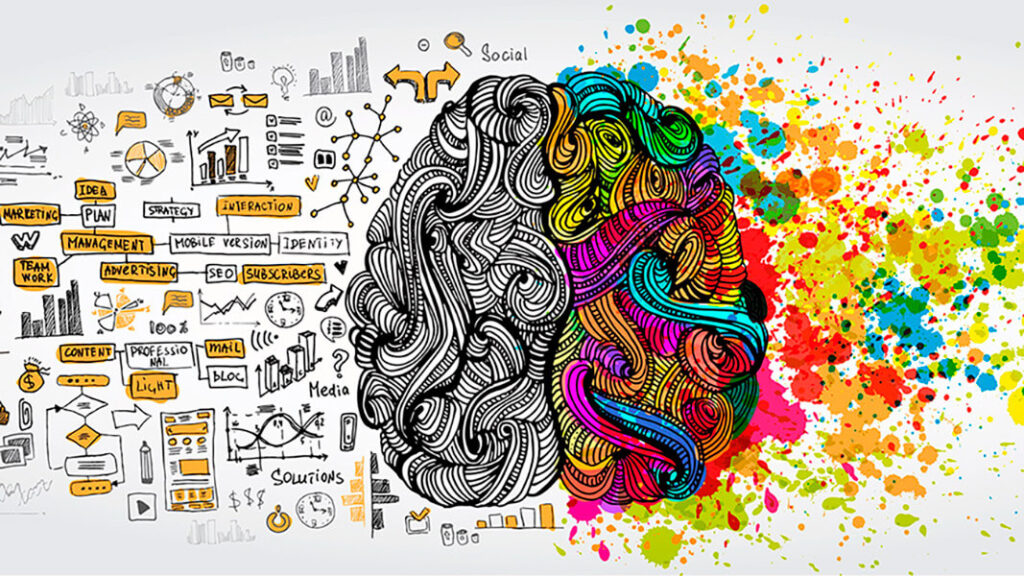
Communication is often treated as secondary in engineering roles, yet it shapes how technical work is understood, reviewed, prioritized, and maintained. It operates across three distinct modes, each of which matters in different situations.
Written communication is where most engineering alignment actually happens. Pull request descriptions, architecture decision records, Slack threads, and async updates — these artifacts outlast any meeting and carry context across time zones. Developers who write clearly reduce misunderstandings, speed up reviews, and create documentation that teams can rely on months later.
Verbal communication becomes critical in meetings, technical discussions, incident calls, and stakeholder updates. The ability to explain a complex trade-off simply, or to push back on a decision without creating defensiveness, is what separates engineers who influence decisions from those who only implement them.
Cross-cultural communication is increasingly relevant as teams span multiple regions and working styles. Developers who cultivate empathy and flexibility in how they deliver and interpret feedback help create the psychological safety that high-performing teams depend on. This is one reason scaling remote teams surfaces communication challenges as quickly as it does — the gaps are simply more visible when tone and intent cannot rely on physical presence.
Problem-solving is not limited to debugging code. It includes framing the real issue, testing assumptions, evaluating alternatives, and deciding on the appropriate level of solution. Some problems need a fast patch. Others need redesign. Skilled developers know the difference.
The strongest engineers can connect the local problem to the broader system. They ask how a solution affects performance, usability, reliability, support load, and future development.
Software is a team product. Even when an individual contributor owns a feature, success still depends on coordination with others. Teamwork involves listening, giving useful feedback, asking for help at the right time, and prioritizing shared progress over personal visibility.
This is one reason agile ways of working remain relevant. The value of agile methodologies for business is not merely ceremonial. It is the discipline of shared planning, shorter feedback loops, and a better connection between engineering effort and business priorities.
Tools change. Priorities shift. Architecture decisions made six months ago may no longer suit the current product. The ideal developer adjusts without losing focus. Adaptability means learning new systems quickly, responding well to project pivots, and staying effective when conditions are less than perfect.
This quality is especially important when teams are integrating AI-assisted workflows, changing release processes, or moving from informal execution to more structured operating models.
Leadership in engineering does not begin with management authority. Developers show leadership when they improve team decisions, mentor less-experienced colleagues, flag risks early, and bring order to uncertain situations. Initiative is often what turns a technically strong developer into a trusted one.
This matters beyond the immediate project. Soft skills are the primary factor in determining whether a developer advances to senior individual contributor, tech lead, or engineering management roles. Technical ability qualifies someone for the work; interpersonal and leadership capabilities determine whether an organization trusts them with more of it. Developers who invest in communication, influence, and mentorship often find that career growth accelerates not because they have become better coders, but because they have become easier and more effective to work with at every level.
Leadership also shapes retention. Teams tend to perform better when expectations are clear, onboarding is deliberate, and senior contributors help create stability. Weak foundations in those areas often surface in articles about poor onboarding and preventable team friction.
A technically capable developer who cannot manage focus, deadlines, and competing priorities will struggle to deliver consistent results — regardless of how strong their code is. Time management in engineering is not administrative overhead. It is a professional execution skill that directly affects team trust.
In practice, this means breaking large projects into manageable tasks with realistic estimates, identifying which work is genuinely urgent versus merely visible, and communicating early when timelines are at risk rather than silently absorbing the pressure. Developers who manage their time well reduce the coordination burden on everyone around them.
Balancing multiple projects — which is the norm rather than the exception in most teams — requires deliberate prioritization rather than reactive task-switching. Techniques like time blocking, explicit WIP limits, and regular check-ins with stakeholders help engineers stay effective without burning through focus. The right tooling (task managers, time trackers, structured standups) supports this, but the underlying discipline has to come first.
The most effective developers do not treat technical and interpersonal abilities as separate tracks. They use both at the same time.
A developer reviewing a pull request needs both technical judgment to evaluate code quality and communication skills to explain concerns without provoking defensiveness. A developer handling an incident needs debugging ability, but also composure and clarity under pressure. A developer proposing an architectural change needs design experience, as well as persuasion, documentation, and the ability to address objections.
This combination is what makes an engineer dependable in practice. Teams trust developers who can solve problems and help others move forward as they do so.
In practical terms, the ideal developer often shows a recognizable pattern of behavior:
None of these behaviors is purely technical or purely interpersonal. Their value comes from how the two skill sets reinforce each other.
Improvement is more effective when developers stop treating soft skills as vague personal traits and start treating them as trainable professional capabilities.
Many hiring processes still overemphasize tool-specific knowledge and underweight the behaviors that shape long-term success. A candidate may answer technical questions well and still struggle in real-world delivery settings if they cannot explain their decisions, collaborate across functions, or adapt to changing requirements.
That imbalance also affects retention. Teams that reward only coding output may overlook mentorship, communication, and ownership until problems become expensive. In many cases, turnover is less about compensation than about team health, role clarity, and management quality, which is why reducing employee turnover in software teams often starts with better day-to-day engineering culture.
The most in-demand hard skills include programming proficiency in at least one primary language, software architecture and system design, testing and quality practices, debugging and root-cause analysis, security awareness, and delivery literacy — meaning version control, CI/CD pipelines, and production monitoring. Together, these form the technical foundation that allows a developer to build reliable, maintainable software in professional team settings.
Yes — and increasingly so. Modern software is built by cross-functional teams working across time zones, not by solo contributors. Soft skills like communication, adaptability, teamwork, and leadership determine how well a developer’s technical work translates into results that the wider team and the business can depend on. Companies now evaluate these capabilities alongside technical skills in hiring and promotion decisions.
Hard skills are the technical capabilities required to design, build, test, and deploy software — things like coding, system design, and debugging. Soft skills are the interpersonal and professional behaviors that shape how technical work gets done within a team: how a developer communicates decisions, handles ambiguity, collaborates under pressure, and contributes to team culture. Both are necessary; neither is sufficient on its own.
The most effective approach is to treat soft skills as trainable rather than fixed traits. Practical steps include writing clearer pull request descriptions and technical documentation, seeking feedback from peers and managers on communication and collaboration, participating in design reviews and retrospectives, and mentoring less experienced colleagues. Improvement comes from repeated practice in real work contexts, not from courses alone.
Hiring managers consistently prioritize communication (especially written clarity in distributed teams), problem-solving that goes beyond the immediate code, adaptability to changing requirements, and the ability to work collaboratively without creating friction. Leadership potential — raising risks early, helping others unblock, and taking ownership of outcomes — is also a strong differentiator for mid- to senior-level roles.
Yes. Technical skills qualify a developer for senior individual contributor work, but advancement into tech lead, engineering manager, or staff engineer roles depends heavily on soft skills. The ability to communicate trade-offs clearly, mentor others, influence decisions without authority, and maintain focus under ambiguity are the capabilities that organizations use to identify future leaders in engineering.
They reinforce each other constantly in practice. Reviewing a pull request requires both technical judgment and the communication skill to deliver feedback constructively. Responding to a production incident requires debugging ability and composure under pressure. Proposing an architectural change requires design experience and the persuasion skills to get stakeholder buy-in. The most effective developers use both simultaneously rather than treating them as separate tracks.
The ideal software developer in 2026 is not a soft-skills specialist who lacks technical rigor, nor a technically gifted engineer who struggles to work with others. The role now requires both. Hard skills make execution possible. Soft skills make execution scalable, reliable, and useful inside real teams.
Developers who build both areas become more effective contributors, stronger collaborators, and more credible future leaders. For employers, that balance is no longer a preference. It is one of the clearest indicators of whether an engineer will create lasting value.