Jan. 27, 2026

20 minutes read
Share this article
Last Updated July 2026
Most articles about learning management systems answer a question nobody with a budget is actually asking. They explain what an LMS is, list ten benefits, and stop. That is useful for about four minutes of a buying cycle that typically runs six to eighteen months and ends in a multi-year contract with deep integration into identity, HR, and reporting systems.
This guide covers the part that gets skipped. What an LMS does at the architecture level, how the learning standards layer determines whether your content survives a platform migration, where integration projects actually fail, what total cost of ownership looks like once you count engineering time, and how to decide between buying a platform, extending one, or building something specific to your operating model.
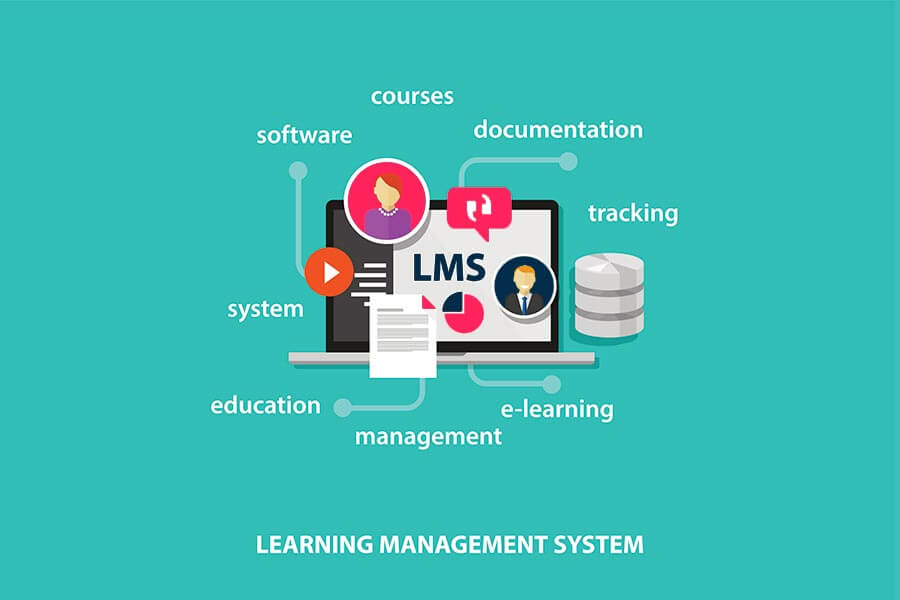
A learning management system is software that creates, organizes, delivers, and tracks learning activity. In education, that means course pages, assignments, grading workflows, assessments, and student communication. In business, it means onboarding, compliance training, certification tracking, and role-based skills development.
That description is accurate and almost useless for evaluation, because it describes the interface rather than the system. Architecturally, an LMS is four layers stacked on top of each other, and platforms differ enormously in how well they handle each one.
1. An identity and enrollment layer that decides who exists, what group they belong to, and what they are assigned. This is where the LMS touches your directory, HR system, or student information system.
2. A content delivery layer that packages and serves learning objects, tracks position within them, and handles sequencing and prerequisites.
3. A records layer storing what happened: attempts, scores, completions, timestamps, and interaction detail. This layer determines audit defensibility and is the one most buyers never inspect.
4. A reporting and orchestration layer that turns records into dashboards, notifications, escalations, and exports.
Vendor demos concentrate on layers two and four because they are visual. Failed implementations almost always break at layers one and three, where a generic platform meets a specific organization. When a team reports that a platform looked excellent in the demo and became unmanageable by month five, the cause is nearly always an enrollment model that could not express how the organization is actually structured. Score platforms on the invisible layers first.
According to the Training Industry Report published by Training magazine, total United States training expenditures fell 3.7 percent to 98 billion dollars in 2024. Payroll accounted for 60.6 billion of that, down 4 percent, while spending on outside products and services moved the opposite way, jumping 23 percent to 12.4 billion dollars.
The same report found organizations spent an average of 13 percent of their training budget, or 268,397 dollars, on learning tools and technologies, down from 360,164 dollars the previous year. Average training hours per employee dropped to 47 from 57. Learning management systems appeared as an anticipated purchase category for 15 percent of respondents, down two points.
On the open source side, the scale is easy to underestimate. Moodle publishes live registration data showing 146,855 currently active registered sites across 236 countries, and that figure excludes sites that requested privacy. Open source platforms are not a fringe option in this category. They are the default in much of higher education and a serious contender in corporate learning where the requirement is deep customization rather than turnkey deployment.
Feature matrices are among the least reliable inputs here, because almost every platform can check almost every box at some level of quality. The useful distinction is between table stakes and capabilities where implementation quality varies enough to change outcomes.
| Capability | Why it decides outcomes | What to test in evaluation |
|---|---|---|
| Enrollment automation | Manual enrollment does not scale past a few hundred learners and becomes the primary administrative cost | Can enrollment be driven by attributes from your HR system or directory without manual intervention |
| Role and permission model | Determines whether managers, instructors, and regional admins can operate independently | Model your actual org structure, including edge cases like matrix reporting and contractors |
| Records and audit trail | Determines whether completion data holds up under regulatory audit | Request a raw record export and inspect field-level detail, not a summary report |
| Integration surface | Determines total engineering cost across the platform lifetime | Review actual API documentation, rate limits, and webhook coverage before signing |
| Accessibility conformance | Determines legal exposure and usable reach | Request a current accessibility conformance report and test with a screen reader |
| Notification logic | Determines completion rates more than content quality does | Test conditional reminder rules, escalation to managers, and quiet hours |
Notice what is absent. Course authoring, gamification, social features, and mobile apps are all worth having, but none is where implementations succeed or fail. Notification logic in particular is chronically undervalued: completion rates respond more reliably to well-designed reminder and escalation rules than to any improvement in content production quality.
The same platform serves both markets, but the failure modes diverge enough that evaluation criteria should differ. Treating a corporate decision as an academic one, or the reverse, produces predictable problems.
| Dimension | Education deployment | Business deployment |
|---|---|---|
| Primary system of record | Student information system holds enrollment truth | HR system holds enrollment truth |
| Dominant integration | SIS sync, gradebook passback, roster provisioning | HRIS sync, single sign-on, performance and compliance systems |
| Regulatory pressure | Student privacy rules and accessibility mandates | Industry compliance, audit evidence, certification renewal tracking |
| Peak load pattern | Extreme seasonal spikes at term start and exam periods | Steady load with spikes at policy rollout and fiscal year end |
| Typical failure mode | Roster sync drift and gradebook mismatches | Stale enrollment rules assigning training to the wrong roles |
| Success metric | Course completion, retention, learning outcomes | Compliance coverage, time to productivity, certification currency |
In education, roster accuracy is the entire game. When the student information system and the LMS disagree about who is enrolled in what, grades post to the wrong records, students lose access mid-term, and instructors stop trusting the platform. Standards-based roster provisioning therefore matters more in academic deployments than any authoring feature.
If you are building or integrating in either environment, this is where an experienced enterprise systems integration approach pays for itself, because the hard part is not the LMS. It is the contract between the LMS and the systems that already hold the truth.
Three acronyms compete here, and vendors blur them deliberately, because a platform positioned in all three categories appears in more evaluations. The distinctions are real and map to different problems.
| LMS | LCMS | LXP | |
|---|---|---|---|
| Core job | Deliver, assign, and track learning | Author, version, and reuse content components | Surface and recommend learning across sources |
| Optimizes for | Administration and compliance | Content production efficiency at scale | Learner discovery and engagement |
| Primary user | Administrator and instructor | Instructional designer and content team | Learner |
| Unit of work | The course or assignment | The reusable content object | The recommendation and the learning path |
| Buy it when | You must prove who completed what | You produce high volumes of content in many variants or languages | You have abundant content and poor discovery |
| Common mistake | Buying it to solve a content production problem | Buying it without an LMS to handle assignment and tracking | Buying it to replace compliance tracking |
The clearest separation: an LMS manages learners, an LCMS manages content, and an LXP manages attention. If you cannot prove who completed mandatory training, that is an LMS problem and no LXP will solve it. If producing a course variant for a new region takes eleven weeks, that is a content architecture problem, and no LMS will solve it.
Standards support is where switching costs are created, which is why this section is absent from almost all vendor content. Content and records conforming to open standards can move between platforms. Content locked in a proprietary format cannot, and a decade of training history you cannot export is an effective vendor lock, whatever the contract says.
| Standard | What it governs | Where it fits |
|---|---|---|
| SCORM 1.2 and 2004 | Packaging and launching self-contained courseware, reporting completion and score | Still the most widely supported packaging format; use it when portability across many LMS platforms matters most |
| xAPI | Recording granular statements about learning experiences to a learning record store, including activity outside the LMS | Use when you need to track experiences beyond formal courses or correlate learning with performance data |
| LTI | Securely launching external tools inside a platform and passing identity, roles, and grades back | The backbone of academic tool ecosystems; how third-party tools integrate without custom development |
| cmi5 | Bridging SCORM-style course launch with xAPI-style data richness | Use when you want xAPI detail but still need managed course launch and completion semantics |
| Caliper | A standard event and metrics format for learning analytics across systems | Use when analytics span multiple platforms and you need consistent event definitions |
The practical guidance is less complicated than the acronym count suggests. SCORM remains the safest packaging choice for portability, because support is nearly universal and a SCORM package created in 2015 will still launch today. xAPI is the right choice when the question you need to answer is not whether someone completed a course but what they actually did, and it requires a learning record store, which is a separate architectural component and a separate cost line.
In academic environments, Learning Tools Interoperability is the standard that determines whether your ecosystem is extensible. An LMS with strong LTI support can absorb assessment tools, proctoring services, content libraries, and analytics platforms without custom integration work for each one. An LMS with weak LTI support requires a bespoke integration per tool, and that cost compounds every year. Caliper addresses the analytics layer, standardizing event definitions so that engagement data from different systems can be compared meaningfully.
This work sits close to general API integration practice with one important difference: learning standards are also data retention standards. A poorly chosen packaging format does not merely make integration harder this year. It strands your training history permanently.
LMS implementations rarely fail because the platform cannot deliver a course. They fail at the seams. Five integration patterns account for most of the trouble, and each has a known architectural answer.
1. Identity and provisioning drift. Single sign-on gets configured correctly while provisioning and deprovisioning stay manual, producing orphaned accounts, departed employees who retain access, and license counts that no longer match headcount. The answer is automated provisioning driven by the directory, with deprovisioning as a first-class requirement.
2. Enrollment logic in the wrong system. Rules maintained inside the LMS become a shadow copy of the org chart that decays immediately. The answer is to derive enrollment from live attributes in the HR or student system, so a role change automatically produces the correct assignment.
3. Record extraction as an afterthought. Requirements get specified against the vendor dashboard, then someone asks for learning data joined to performance data and finds no reliable export path. The answer is to specify the data contract during evaluation and validate it against real record volumes.
4. Content pipeline coupling. Authoring tools output packages that only work on the current platform version, so an upgrade breaks the content library. The answer is to enforce standards conformance at the pipeline boundary and validate packages automatically.
5. Notification logic scattered across systems. Reminders come from the LMS, escalations from a workflow tool, and manager visibility from a report nobody opens. The answer is one owner for the whole completion-chasing workflow, with the logic in whichever system holds the most reliable org data.
For organizations with older systems in the mix, this is where an LMS project often reveals itself as a legacy modernization project wearing a different name. The learning platform is new, but the student information system or HR platform it must integrate with may be twenty years old, with no usable API surface and an integration story of nightly file transfers.
The default assumption is that learning platforms should be bought, and for most organizations that is correct. But there are three options rather than two, and the middle one is most often overlooked.
| Buy commercial | Extend open source | Build custom | |
|---|---|---|---|
| Time to first value | Fastest, weeks to a few months | Moderate, one to two quarters | Slowest, multiple quarters |
| Fit to unusual requirements | Poor beyond configuration limits | Good, source access removes ceilings | Complete by definition |
| Ongoing engineering need | Low for the platform, real for integrations | Moderate and continuous | High and permanent |
| Cost profile | Predictable license, unpredictable services | Lower license, higher engineering | No license, highest engineering |
| Data and records control | Constrained by vendor export capability | Full, database level access | Full |
| Right when | Requirements are conventional and speed matters | Requirements are specific but the learning domain is standard | Learning delivery is a differentiating product capability |
The genuine build case is narrower than most internal advocates believe. Building is justified when learning delivery is part of your product rather than your operations. An education technology company selling courses, a certification body whose credential is the product, or a platform embedding training in a customer-facing application all qualify. An enterprise training its own staff almost never does.
The extended case is more common than its adoption suggests. An organization with unusual requirements and a competent engineering function often reaches a better outcome by extending a mature open source platform than by buying a commercial product and paying for customization the vendor delivers slowly. The critical discipline is respecting extension boundaries: customizations built through documented plugin interfaces survive upgrades, while those built by modifying core code create a permanent maintenance burden and eventually a platform you cannot upgrade at all.
Either way, custom application development capacity is required for the integration layer regardless. Nobody buys their way out of connecting a learning platform to the systems that hold their identity and organizational data.
License cost is the most visible number and rarely the largest one over a platform lifetime. Business cases comparing only license figures produce decisions that look defensible on paper and unpleasant in year two. Model five years rather than three, and include a line for platform exit even if you have no intention of leaving, because that line forces the standards conversation into the evaluation where it belongs.
| Cost category | Frequently underestimated because |
|---|---|
| Integration engineering | Scoped as a one-time build, but every upstream system change requires rework |
| Content migration | Legacy packages often need repackaging or rebuilding, not just transferring |
| Administrative labor | Manual enrollment and reporting work grows with learner count and does not appear in any quote |
| Accessibility remediation | Platform conformance does not make your content conformant |
| Reporting and analytics | Getting learning data into the BI stack is a separate project with its own maintenance |
| Exit cost | Extracting complete history in a usable format, often the largest single surprise |
Accessibility in learning platforms is a legal requirement in many contexts and an engineering requirement in all of them. It is also the area where vendor claims and delivered reality diverge most often, because platform conformance and content conformance are separate problems and vendors are only responsible for one.
In United States public sector and federally funded contexts, Section 508 establishes the obligation, and the Web Content Accessibility Guidelines published by the World Wide Web Consortium provide the technical criteria that conformance is measured against. On the privacy side, academic deployments in the United States must handle student education records under FERPA, and any deployment touching learners in the European Union falls under the GDPR, which matters considerably for xAPI implementations because granular behavioral tracking of individuals raises questions that course completion records do not.
A platform can be fully conformant while every course delivered through it is unusable with a screen reader. Uncaptioned video, untagged PDFs, and color as the only carrier of meaning are content failures no platform choice will fix. The answer is automated checks in the content pipeline, which is far cheaper than retrofitting a published library, and quality gates in the testing and QA process are the natural place for them.
Completion rate is the metric most learning programs report and the least informative one available. It measures whether people clicked through, which correlates weakly with whether anything changed. Better measurement is not harder, just less commonly specified.
| Level | What it measures | Where the data comes from |
|---|---|---|
| Coverage | Whether the right people were assigned the right learning | Enrollment rules validated against live HR or SIS attributes |
| Comprehension | Whether understanding changed | Pre and post-assessment with item-level analysis |
| Application | Whether behavior changed on the job | Operational systems, not the LMS |
| Business outcome | Whether the intended result moved | Business metrics correlated with learning cohorts |
| Content quality | Which modules cause drop-off or failure | Item analysis and per-module completion funnels |
The most actionable row is the last one. Per-module completion funnels show exactly where learners disengage, which is the only reliable input to content improvement. A program reporting one aggregate completion figure has no mechanism for getting better, because the number says nothing about what to change. This kind of outcome-driven measurement discipline applies to learning platforms the same way it applies to any other product surface.
Six mistakes account for most troubled LMS implementations, and all six are visible early enough to correct.
1. Selecting the platform before writing the integration contract. Once signed, integration constraints become problems to work around rather than criteria to select on.
2. Migrating the existing process unchanged. An LMS that automates a broken enrollment process produces broken enrollment faster and at larger scale.
3. Treating content migration as a data transfer. Legacy content often needs rebuilding rather than moving, and discovering that after go-live compresses the work into the worst possible window.
4. Leaving enrollment partially manual. Any manual step in the enrollment path becomes a permanent staffing requirement that grows with the learner population.
5. Deferring accessibility to a later phase. Retrofitting a published library costs several times more than building conformance into production standards from the start.
6. Launching without notification logic configured. Completion rates depend heavily on reminder and escalation design, and programs launching without it wrongly conclude their content is the problem.
A seventh pattern is a structural risk rather than a mistake: launching without a named owner for the integration layer. Content ownership is usually clear, and administration is usually assigned, but the connections to upstream systems belong to nobody in particular, and that is where silent failures accumulate, because nothing visibly breaks when a nightly sync starts skipping records. It surfaces later as the kind of onboarding failure that gets blamed on content when the cause is enrollment plumbing.
There are situations where the honest recommendation is to not buy one at all, and recognizing them saves money and organizational credibility.
If you have fewer than roughly fifty learners and no compliance obligation, platform overhead will exceed the benefit. Structured content in a well-organized shared workspace with a simple tracking sheet handles that scale adequately.
If your actual problem is that content does not exist or is poor, a platform will not help. An LMS distributes and tracks content. It does not create it, and it will make the absence of good content more visible rather than less.
And if learning delivery is genuinely a differentiating capability of your product, a general-purpose LMS will constrain you in ways that become apparent about eighteen months in. That is the narrow case where custom LMS development is the right answer rather than the expensive one, because the platform is part of what you sell rather than part of how you operate.
Three shifts are changing what a competent learning platform looks like, and each has architectural consequences worth planning for now.
The move from completion tracking toward granular experience data changes the data architecture rather than the interface. A learning record store handling xAPI statements at volume is an analytics system with analytics-scale requirements, and it raises privacy questions completion records never did. Organizations adopting xAPI seriously are building a data platform and should plan it as one, with retention, access control, and minimization decided before collection starts.
The credible near-term applications sit in content operations rather than delivery: generating assessment item variants, drafting localized versions, identifying gaps against a skills framework, and summarizing long material into pre-work. Adaptive sequencing that responds to demonstrated understanding is real, but it needs item-level assessment data that most programs do not collect. The prerequisite for useful personalization is measurement discipline, not model access.
The direction of travel is toward a smaller platform core handling identity, assignment, and records, with specialized tools attached through standard interfaces for authoring, assessment, proctoring, and analytics. This is why standards support is now the most strategically important selection criterion rather than a technical footnote. A platform with strong conformance can participate in a composable architecture. A platform without it becomes the constraint that everything else has to accommodate.
An LMS manages learners: it assigns, delivers, and tracks learning, and holds the records of who completed what. An LCMS manages content: it authors, versions, and reuses components so variants can be produced efficiently. If your problem is proving completion, you need an LMS. If producing content variants takes too long, you need an LCMS. Organizations at scale often run both, with the LCMS producing standards-compliant packages the LMS delivers and tracks.
Choose SCORM when portability is the priority, because support is close to universal and packages stay launchable for years. Choose xAPI when you need to know what learners actually did rather than whether they finished, or to track experiences outside formal courses. xAPI requires a learning record store as a separate component with its own cost and privacy obligations. cmi5 is a reasonable middle path.
License cost is usually the smaller half of the total. Over five years, the significant categories are integration engineering, content migration, ongoing administrative labor, accessibility remediation, reporting work, upgrade regression testing, and eventual exit cost. Model five years rather than three and include an exit line even if you do not plan to leave.
When learning delivery is part of what you sell rather than part of how you operate. Education technology companies, certification bodies whose credential is the product, and platforms embedding training in a customer-facing application have real build cases. Enterprises training their own staff almost never do. The overlooked middle option is extending a mature open source platform through documented plugin interfaces.
Because failure happens at the integration seams rather than in the platform. The recurring causes are identity provisioning drift, enrollment rules maintained inside the LMS instead of derived from live HR or student system attributes, record export treated as an afterthought, content pipelines coupled to one platform version, and notification logic with no single owner. Writing the integration contract before selecting the platform prevents most of it.
A learning management system decision is an integration decision wearing a content management costume. The platform comparison that consumes most evaluation time matters less than four questions that receive almost none: which system owns enrollment truth, how deep the learning records go, what open standards govern content and history, and what it costs to get your data out.
The budget picture reinforces the point. With internal training payroll contracting while spending on outside products and services rose 23 percent, the organizations getting results are the ones treating learning platforms as engineering systems with real data contracts rather than as software purchases. That framing is what turns a learning platform from an administrative tool into infrastructure that the rest of the business can actually build on.
Coderio is a nearshore software development company with 9+ years of experience building distributed engineering teams across Latin America for Fortune 500 companies.
Our editorial team brings together software engineers, solution architects, and technology strategists with hands-on exposure across backend and frontend architecture, cloud infrastructure, mobile development, and data engineering.
We write from direct technical and operational experience, covering the strategic and delivery decisions that shape how modern software teams are designed and run. When we publish on engineering team structure, distributed execution, or regional hiring strategy, it reflects what we see working across the technology organizations we partner with.
Coderio is a nearshore software development company with 9+ years of experience building distributed engineering teams across Latin America for Fortune 500 companies.
Our editorial team brings together software engineers, solution architects, and technology strategists with hands-on exposure across backend and frontend architecture, cloud infrastructure, mobile development, and data engineering.
We write from direct technical and operational experience, covering the strategic and delivery decisions that shape how modern software teams are designed and run. When we publish on engineering team structure, distributed execution, or regional hiring strategy, it reflects what we see working across the technology organizations we partner with.
Accelerate your software development with our on-demand nearshore engineering teams.